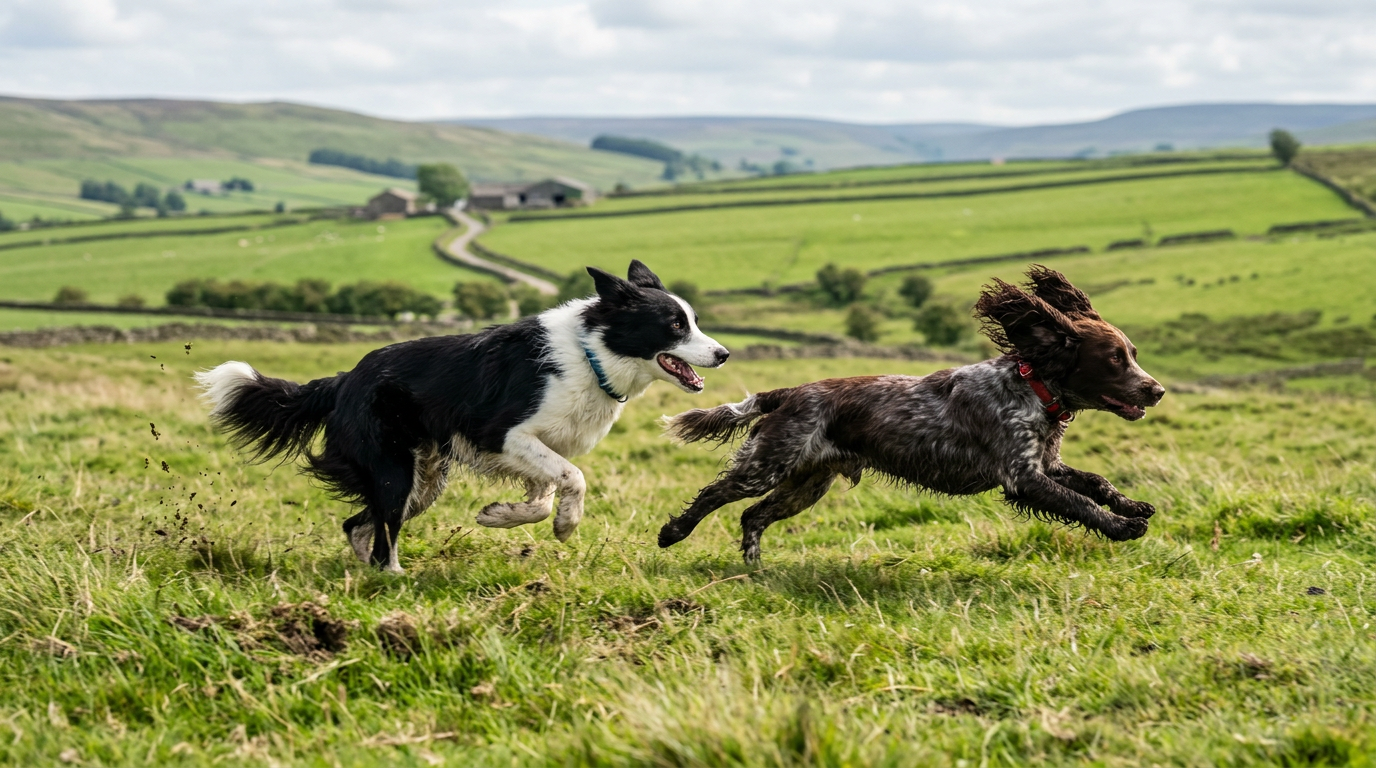
A British winter tests the resolve of even the keenest dog owner. The days are short, the weather is grim, and the temptation to skip the walk is strong. But dogs still need physical exercise and mental stimulation through the cold months — an under-exercised dog is often a restless, frustrated one. With a little preparation, winter can be one of the most rewarding times to get outside together: crisp air, quiet trails and a dog that sleeps beautifully afterwards.
Is It Too Cold to Walk?
For most healthy, medium-to-large dogs with a decent coat, typical British winter temperatures are perfectly safe with sensible precautions. Cold tolerance varies enormously, though. Small dogs, thin-coated breeds like greyhounds and whippets, puppies, elderly dogs and those that are unwell lose heat far more quickly and feel the cold much sooner.
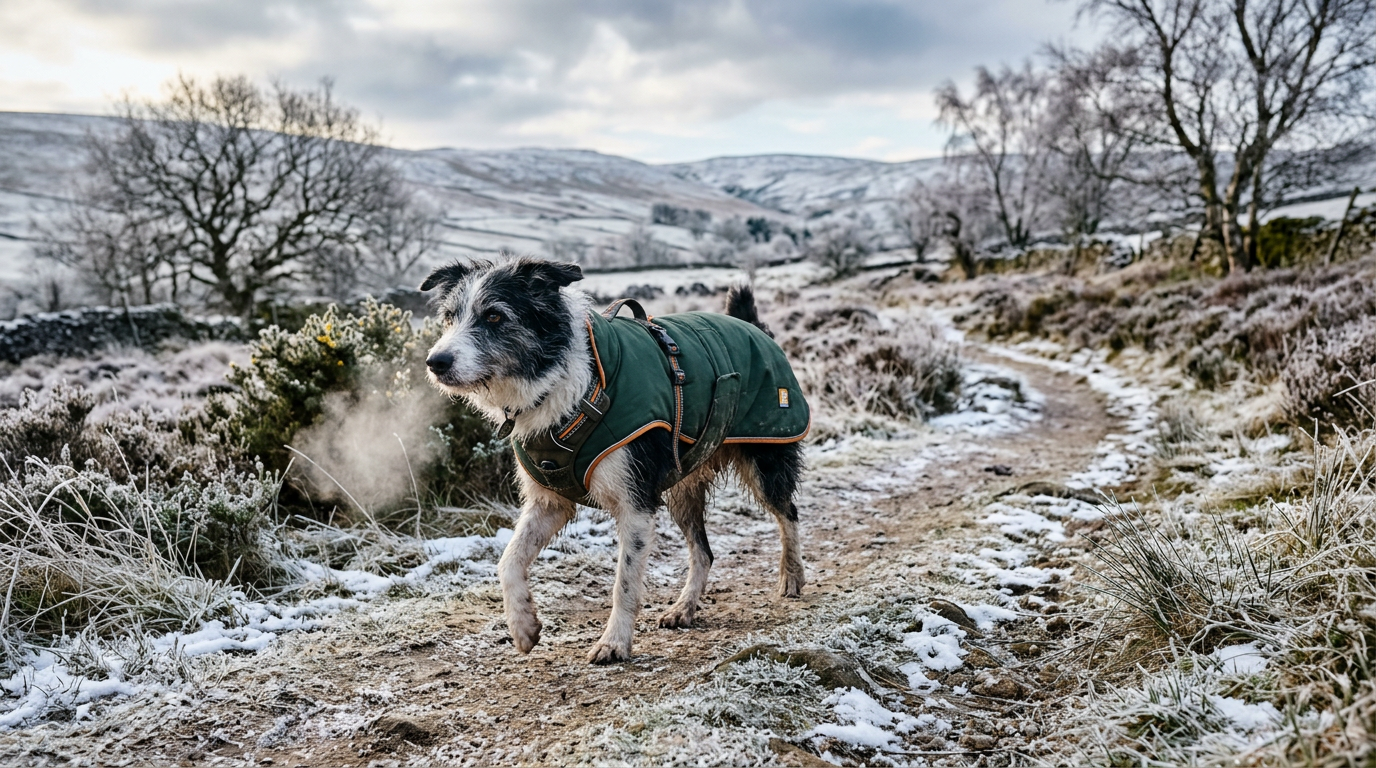
Watch your dog for signs they are genuinely cold rather than just damp: shivering, reluctance to walk on, lifting paws off the ground, whining or seeking shelter. If you see these, cut the walk short and warm your dog up. For vulnerable dogs, a well-fitted insulated coat makes a real difference, and shorter, more frequent walks are kinder than one long outing in bitter conditions.
Grit, Salt and Winter Hazards
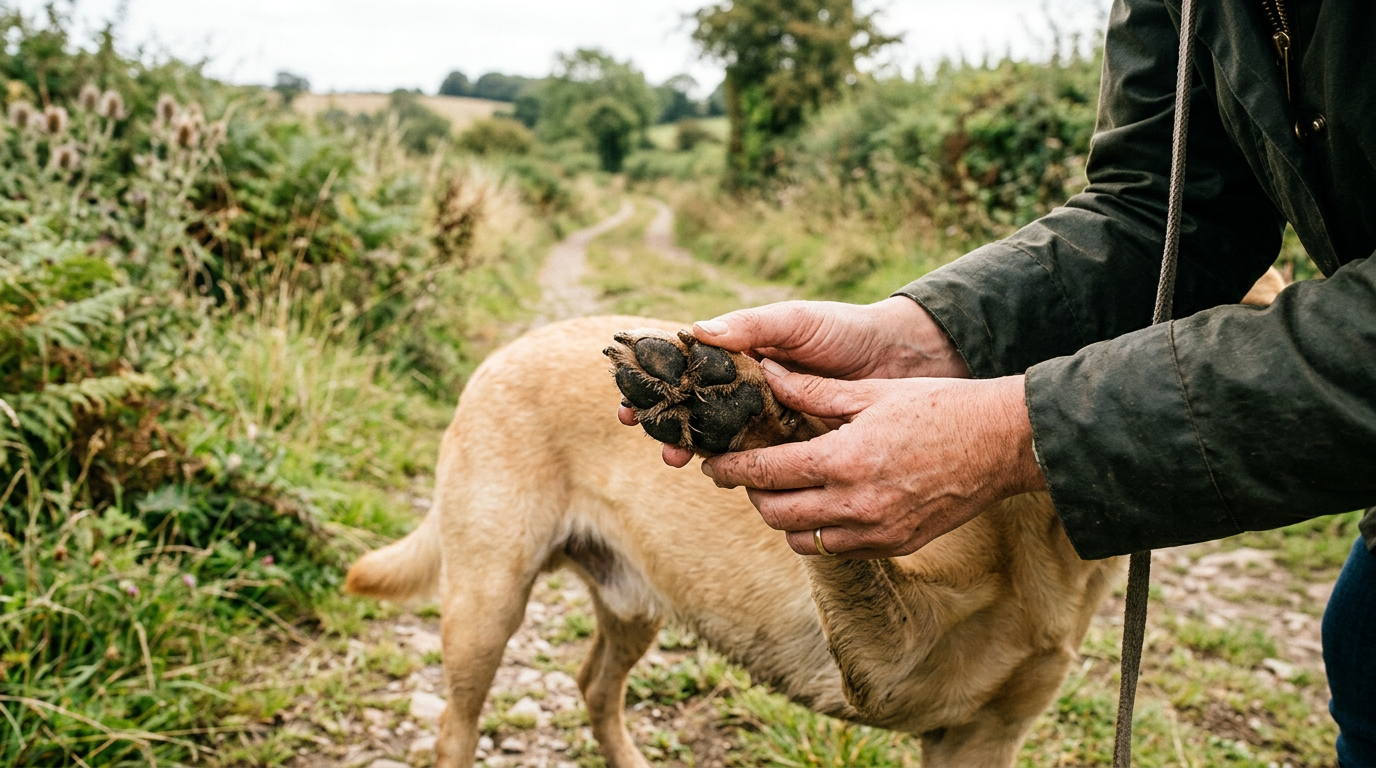
Winter brings hazards that are easy to miss. The rock salt and grit spread on roads and pavements can irritate and crack paw pads, and is harmful if your dog licks it off their feet. After walks near treated roads, rinse and dry your dog’s paws, and consider a paw balm to protect the pads. Dog boots suit some dogs well if they will tolerate them.
Antifreeze deserves special mention: it tastes sweet, is extremely poisonous even in tiny amounts, and is a genuine winter killer. Clean up any spills at home immediately and keep your dog away from puddles near parked cars. Frozen ponds, lakes and rivers are another serious danger — never let a dog onto ice, as it may not bear their weight, and tragedies happen every year when owners then go in after them.
Dressing for the Weather — You and the Dog
Your own comfort matters, because a cold, miserable owner cuts walks short. Invest in proper waterproofs, warm layers, a hat and gloves, and grippy footwear for icy or muddy ground, and winter walks suddenly feel far more inviting.
For the dog, a coat is not vanity for vulnerable animals — it is practical insulation that lets them stay out comfortably. Choose one that covers the chest and belly, fits without restricting movement, and ideally is waterproof for our famously wet weather. A high-visibility element is invaluable in the dark afternoons. After a wet walk, towel your dog dry thoroughly, paying attention to the belly, legs and between the toes, and make sure they are properly dry and warm before settling.
Seeing and Being Seen in the Dark
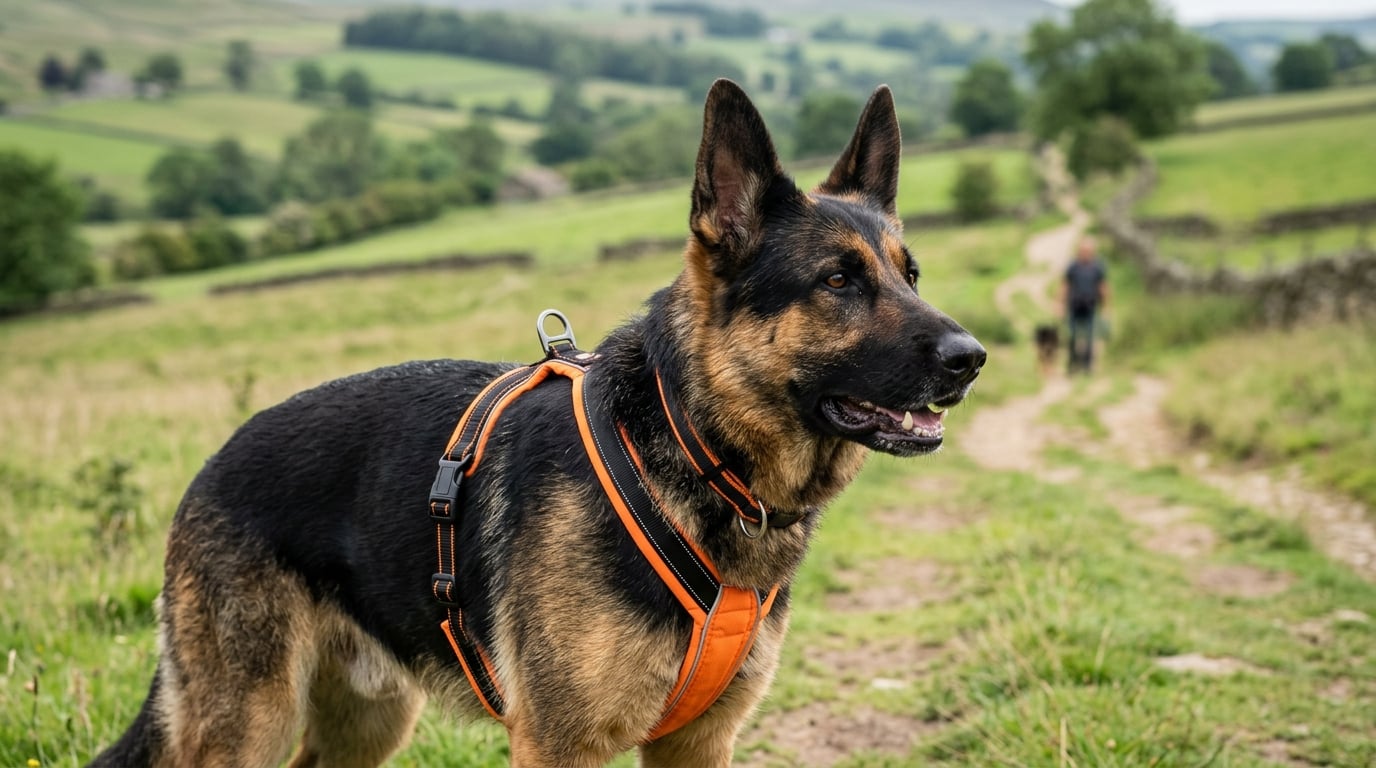
Much of a winter’s dog walking happens in the dark, and visibility becomes a safety issue for both of you. Kit your dog out with a light-up or reflective collar or harness and, on quiet lanes, a light-up lead so you can see them and drivers can see you both. A head torch keeps your hands free and lets you spot hazards — and pick up after your dog — in the gloom.
Stick to familiar, well-lit or well-known routes after dark rather than exploring unlit new trails, and keep dogs with unreliable recall on a long line where they might otherwise disappear into the night. Being visible to traffic is not optional on dark rural roads; assume drivers cannot see you until you have made sure they can.
Beating Cabin Fever Indoors
When the weather truly closes in, indoor activity keeps a dog’s body and mind ticking over. Mental stimulation is wonderfully tiring: food-puzzle toys, snuffle mats, scatter-feeding and simple nosework games where your dog searches for hidden treats can wear a dog out surprisingly well without a single muddy paw.
Short training sessions to teach or polish tricks, indoor games of tug or gentle fetch down a hallway, and even a canine-friendly set of stairs for controlled up-and-down work all help burn energy. Think of these as a supplement to outdoor exercise rather than a replacement — but on the worst days, a tired, contented dog indoors is a far better outcome than a frustrated one staring at the rain.
Key Takeaways
- Most healthy dogs cope with British winter temperatures; small, thin-coated, young and old dogs feel cold far sooner.
- Rinse paws after gritted roads, guard against poisonous antifreeze, and never let a dog onto ice.
- A well-fitted waterproof coat and thorough towel-drying keep vulnerable dogs comfortable.
- Use reflective or light-up gear and a head torch for dark winter walks.
- Indoor puzzles, nosework and training beat cabin fever when the weather is truly foul.

Adventures With Your Dog
by Steve Charles
Your next great adventure starts here — packed with inspiration for exploring the outdoors together.
Get on AmazonThis article is for general guidance only and is not a substitute for professional veterinary advice. If you are worried about your dog’s health, always consult your vet.