For any sport that involves your dog pulling — canicross, bikejoring, scootering — the harness is the single most important piece of kit you will buy. Get it right and your dog can pull powerfully and comfortably all day; get it wrong and you risk chafing, restricted movement and even long-term injury. Here is how to make the right choice.
Why a Collar Is Never Enough
Attaching a pulling line to a collar puts all the force through your dog’s neck, compressing the windpipe and straining the delicate structures of the throat and spine. For any activity where the dog leans into the line, this is both uncomfortable and potentially dangerous.
A well-designed harness spreads the load across the chest and shoulders — the strongest part of a dog’s body — allowing them to pull naturally and efficiently. This is why every pulling sport requires a proper harness rather than a collar or a simple everyday walking harness.
Understanding Harness Types
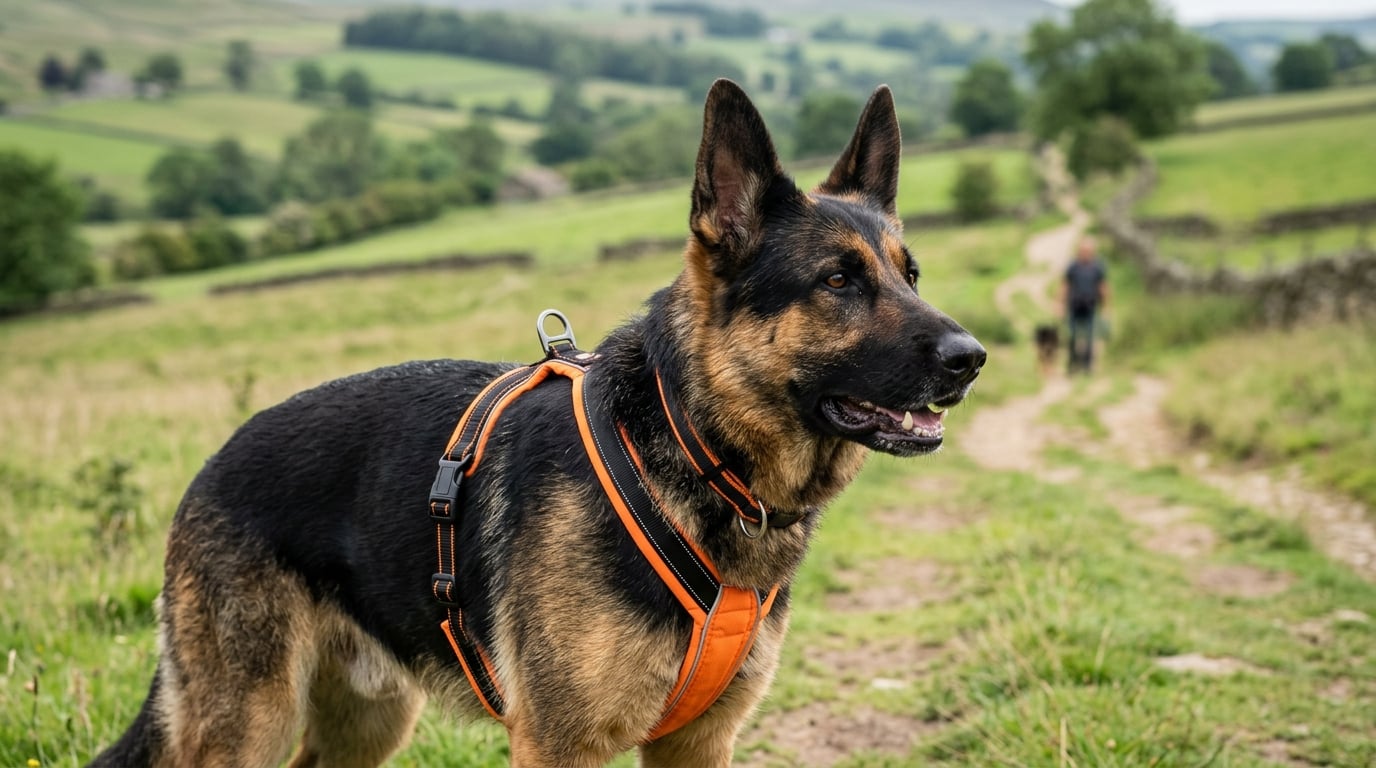
For pulling sports, the gold standard is an X-back or H-back harness: a long design that runs the full length of the dog’s back and distributes pulling force smoothly, ideal for sustained pulling in canicross and bikejoring. These allow a full range of motion when the dog is working in a straight line.
For activities with more stopping, starting and turning — or for dogs still learning — a shorter Y-shaped or half harness can offer more versatility. Whatever the style, the front should form a Y across the chest, sitting clear of the throat and never pressing across the shoulder joints, so the front legs can move freely.
Getting the Fit Right
A harness that fits badly is worse than no harness at all. The neck opening should sit comfortably in front of the shoulders and clear of the windpipe, and you should be able to slide two fingers flat beneath any strap. Straps must not rub in the “armpit” area behind the front legs, a common site of painful chafing.
Check the fit with the dog both standing and in motion, and watch for any restriction as the front legs reach forward. Because breeds and body shapes vary so widely, measuring your dog carefully and, where possible, trying harnesses on before buying will save a great deal of frustration.
Materials, Padding and Care
Look for lightweight, quick-drying materials with soft padding at the points of contact — chest, shoulders and behind the legs. Sports harnesses get wet and muddy, so easy-to-clean fabrics and secure, robust stitching are worth paying for.
Rinse and dry the harness after wet or muddy outings, check regularly for fraying and worn stitching, and replace it as your dog’s body changes with age and fitness. A growing dog in particular may need refitting several times, so re-check the fit periodically rather than assuming last season’s harness still fits.
Key Takeaways
- Never attach a pulling line to a collar — it strains the neck and spine.
- X-back harnesses suit sustained pulling; Y-shaped suit versatile use.
- The front should form a Y clear of the throat and shoulder joints.
- Check fit standing and moving — two fingers under every strap.
- Choose padded, quick-drying materials and re-check the fit over time.

Adventures With Your Dog
by Steve Charles
Your next great adventure starts here — packed with inspiration for exploring the outdoors together.
Get on AmazonThis article is for general guidance only and is not a substitute for professional veterinary advice. If you are worried about your dog’s health, always consult your vet.