Wild swimming is one of the most joyful activities you can share with a water-loving dog — but open water carries one hazard that every owner must take seriously: blue-green algae. These naturally occurring bacteria can produce toxins so potent that they can kill a dog within hours of exposure. Understanding the risk is the first step to enjoying the water safely.
What Blue-Green Algae Actually Is
Despite the name, blue-green algae are not truly algae at all but a type of bacteria called cyanobacteria. They occur naturally in lakes, ponds, canals and slow-moving rivers, and under the right conditions they multiply rapidly to form dense concentrations known as “blooms”.
Blooms are most common in warm, still weather from late spring through to autumn, but they can appear at any time of year. Not every bloom is toxic — but you cannot tell by looking whether a particular one is dangerous, so every bloom must be treated as a potential threat.
How to Spot It
Blue-green algae often looks like pea soup or green paint on or just below the surface of the water. It can also appear as blue-green or brownish scum collecting at the water’s edge, as a greenish sheen, or as small clumps and flecks suspended in the water.
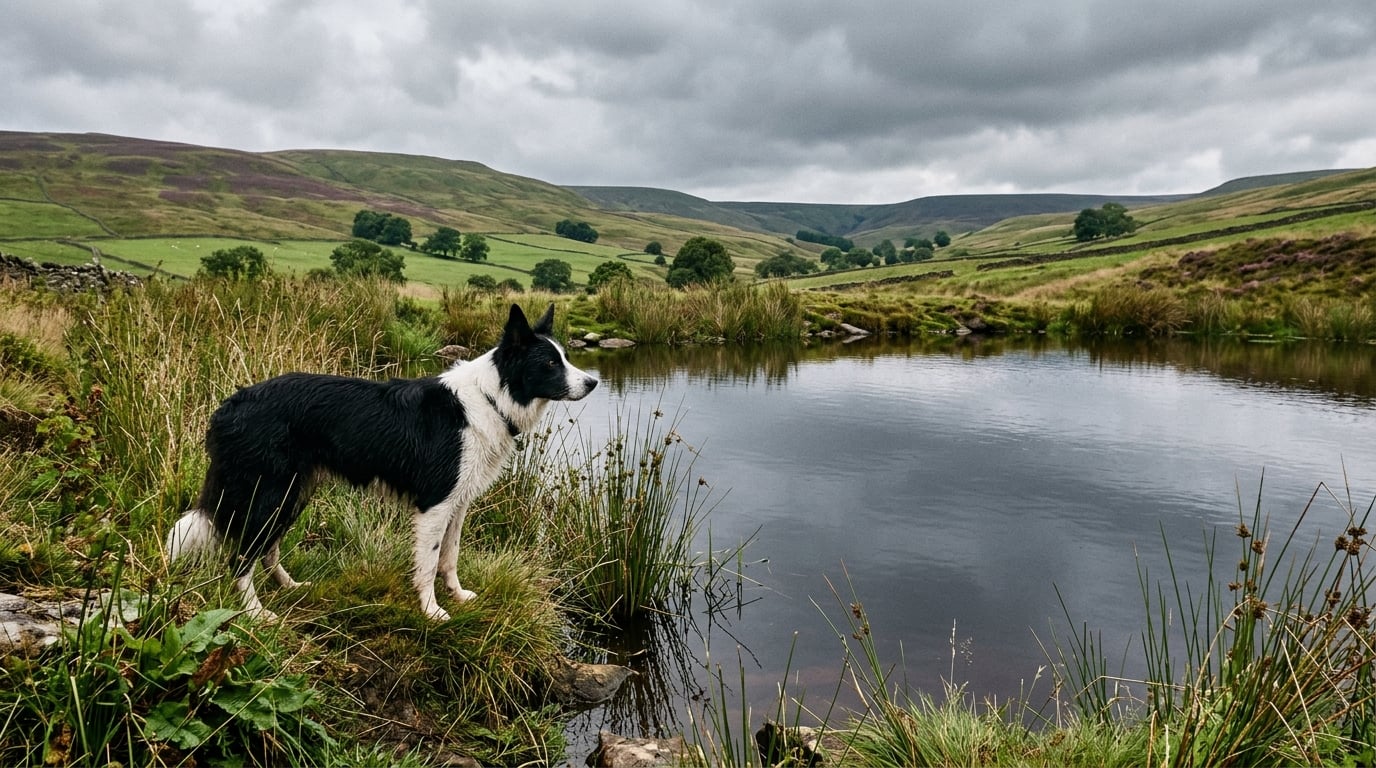
Wind tends to push blooms towards one shore, so the edges of a lake are frequently where concentrations are highest — exactly where a dog is most likely to paddle and drink. If the water looks discoloured, scummy or simply “off”, keep your dog out of it and away from the shoreline.
Why It Is So Dangerous
Toxic blooms produce chemicals that can damage the liver and nervous system extremely quickly. Dogs are especially at risk because they swim in affected water, swallow it while swimming, and then ingest more when they lick their coats and paws dry afterwards.
Symptoms can appear within minutes to hours and may include vomiting, diarrhoea, drooling, disorientation, difficulty breathing, seizures, and collapse. There is no antidote, so treatment is supportive and urgent. Sadly, exposure to a highly toxic bloom is frequently fatal, which is why prevention is everything.
Staying Safe on the Water
Before letting your dog swim, check for any warning signs posted by local authorities or landowners, and scan the water yourself for discolouration or scum. When in doubt, stay out — choose clear, flowing water over still, murky water, and rinse your dog with clean water after any swim.
If you suspect your dog has been in contact with blue-green algae, do not wait for symptoms. Contact your vet immediately, tell them you suspect algae exposure, and get your dog seen as an emergency. Rapid treatment offers the best possible chance, and minutes can matter.
Key Takeaways
- Blue-green algae is toxic cyanobacteria found in still, warm water.
- It often looks like pea soup, paint or scum, especially at the shoreline.
- Toxins can cause fatal liver and nerve damage within hours.
- When in doubt, keep your dog out and choose clear, flowing water.
- Suspected exposure is an emergency — call your vet immediately.

Adventures With Your Dog
by Steve Charles
Your next great adventure starts here — packed with inspiration for exploring the outdoors together.
Get on AmazonThis article is for general guidance only and is not a substitute for professional veterinary advice. If you are worried about your dog’s health, always consult your vet.